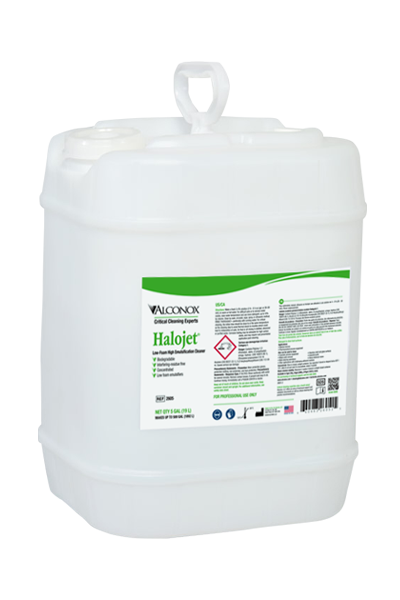
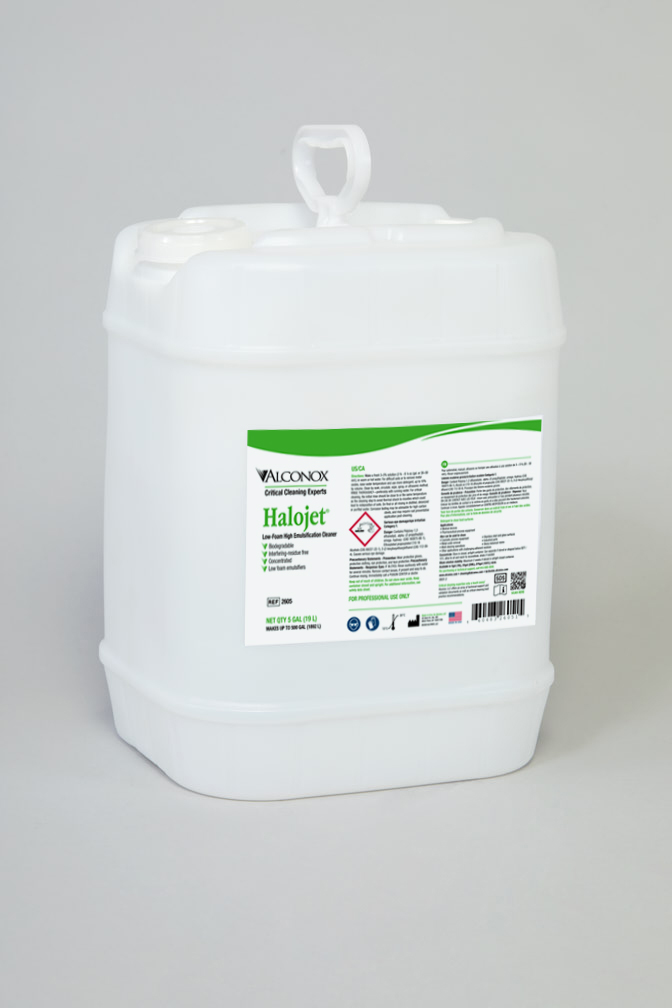
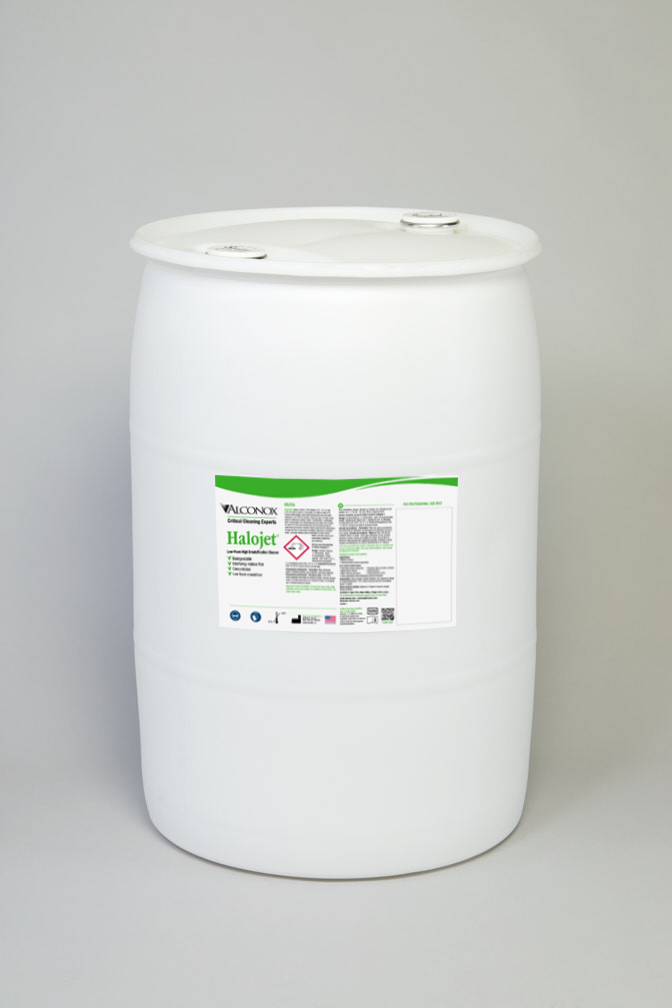
Halojet®
Low-Foam High Emulsification Cleaner
Price range: $305.00 through $3,823.00
Halojet is a low foaming high emulsifying detergent for efficient removal of metal oxides, soils, buffing compounds, oils, particulates, chemicals and solvents, and mold releases in automated, manual, or ultrasonic cleaning.
- Concentrated to save you money
- High dispersing for effective complete metal oxides pigment removal
- Low foaming for efficient automated washing system and CIP use
- Free rinsing to give you reliable results and no interfering residues
- Low foam emulsifiers for tough-to-clean residues on hard surfaces
- Corrosion inhibited formula
Used to clean: Manufacturing equipment, cosmetics residues, injection molds, fouled metal parts in maintenance and repair operations from marinas to automotive to aerospace to oil & gas, such as filters, fins, exchangers, pump heads, engine blocks, exhaust systems, and more; metal castings, forgings and stampings, industrial parts, pipes, tanks and reactors. Use to clean steel prior to passivation.
Used to remove: Hard to clean soils, grit, grime, slime, grease, buffing compounds, oils, particulates, deposits, chemicals and solvents, mold releases, metal oxides, and much more.
Surfaces cleaned: Corrosion inhibited formulation recommended for hard metals, steels, stainless steel, porcelain, ceramic, rigid plastics, cement, and elastomers. Do not use on soft metals such as copper, aluminum, zinc and magnesium.
Cleaning method: Soak, spray, brush, sponge, cloth, ultrasonic, flow through clean-in-place, agitation, or automated washing. Please ensure gasket compatibility.
Make a fresh 3% solution (8 Tbsp/US gal, 4 oz/US gal or 30 ml/L) in warm or hot water. For difficult soils or to remove metal oxides, raise water temperature and use more detergent, up to 10% by volume. Clean by soak, circulate, wipe, spray, or ultrasonic method. RINSE THOROUGHLY—preferably with running water. For critical cleaning, the initial rinse should be close to or the same temperature as the cleaning step to avoid thermal shock to micelles which could lead to redeposition of soils. Do final or all rinsing in distilled, deionized or purified water. Corrosion testing may be advisable for high-carbon steels, and may require rust preventative application post-cleaning.